Hello, Anthropic!
I'm Zeke. I am a designer and engineer and the first employee at Replicate, a platform for running AI models in the cloud. I've been at Replicate for four years now, and I'm starting to look for new opportunities. I'm interested in engineering roles at Anthropic, where I can help build the future of natural language programming.
I've worked on developer tools for more than 15 years at companies like Heroku, npm, and GitHub. I co-created Swagger (now OpenAPI), a specification that has become an industry standard and an integral part of Anthropic's Model Context Protocol. You can read my CV for a full summary of my work history.
My work is about making it easier and more fun for humans to use computers. I love building tools that help people achieve their creative goals. The recent rise of large language models with access to tools has been the most exciting development in my career, and is exactly the kind of leap forward that I've always wanted as a designer and developer.
I'm very excited about what you all are building, and I would love to be a part it.
~ Zeke
I'm a generalist. I've worked on many things at Replicate, from product design to engineering to developer advocacy. I helped build our Django web frontend, our Golang HTTP API, and our usage-based billing system. I maintain our Python and TypeScript client libraries and our MCP server. I write documentation, blog posts, and changelog entries. I create video tutorials and open-source demo apps. I helped design and create Cog, an open-source tool for building and packaging AI models in Docker containers, with a standardized API interface based on OpenAPI, JSON Schema, Pydantic, and FastAPI.
Before joining Replicate, I was a staff engineer at GitHub for five years. I helped launch Electron, the open-source tool for building desktop apps, which has become the basis for apps like Slack, VS Code, Cursor, and Claude Desktop. On the Electron team, I internationalized electronjs.org, added Typescript support, and helped manage an active community of international open-source contributors, and created a governance model for the project. After Electron, I founded GitHub's first docs engineering team. We launched docs.github.com, internationalized docs.github.com, open-sourced docs.github.com, and co-created the OpenAPI description for GitHub's REST API.
I have extensive knowledge of the AI/ML landscape, having spent the last four years working full-time at an AI startup, and having had access to the earliest versions of Copilot while working at GitHub. Replicate runs thousands of AI models in production, from open-source models like Flux, Qwen, and Wan to proprietary models like GPT, Claude, Gemini, Veo, and others. I know the commonalities and differences between these models, and I've worked on tools, documentation, and demos to support users working with all AI modalities, from text to images to audio to video.
I use Claude Code every day, and it has become my favorite tool for writing code and automating tasks. I've been coaching my team at Replicate on best practices for using Claude, and we are starting to connect and adapt our many disparate codebases together in unforeseen ways. We experiment with lots of coding products like OpenAI Codex, Gemini CLI, Cursor, Warp, and others, but Claude Desktop, Claude Code CLI, Claude Code for GitHub, and Claude Code on mobile have taken the lead as our company's tools of choice. We're experimenting with all the various ways to bring Claude into all of our processes, not just for writing code, but for understanding our data in Metabase, our conversations in Slack, our internal documentation in Notion, and our project management in Linear.
Below you'll find some recent examples of things I've been working on with Claude Code, both in my professional and personal life.
I recently helped launch mcp.replicate.com, a remote and local MCP server for Replicate's HTTP API. We built it in collaboration with Stainless, the SDK company that helps maintain some of Anthropic's SDKs. I think MCP is one of the most important advancements in the AI ecosystem in the last year, and my work in 2025 has been largely focused around making it more accessible and useful for developers, and adapting Replicate's product (API, client libraries, docs, etc.) to work well for MCP users.
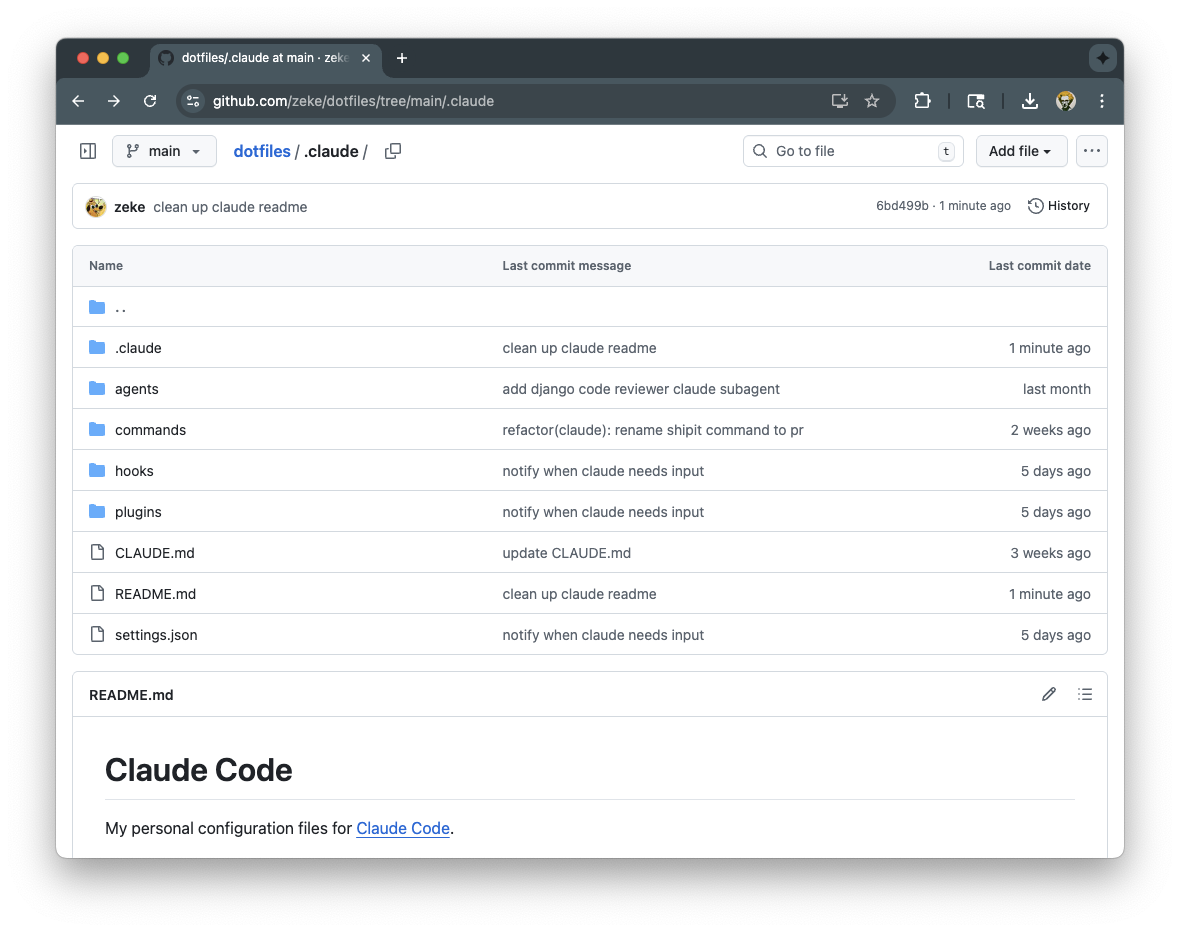
I've published my personal Claude Code config in my dotfiles repo on GitHub, so I can explore new ways of tweaking Claude and leave an open-source papertrail in the process. Knowing how to successfully configure and use Claude Code seems like the most important thing for developers to be focusing on right now, for the sake of their own productivity.
I've started to use Claude for more than just coding tasks. Using MCP tools like Playwright, I recently worked with Claude to help find a custom vanity plate on the California DMV website. The remarkable thing about this process was that Claude doesn't need to write code: instead it can use tools to solve the problem in real-time, using a real web browser, responding to issues along the way and finding creative solutions for the task at hand. What I love about this approach is that it's adaptive. In the past I would have written code to solve this problem, but code is inherently brittle: One change to the DMV website and the software could easily break. With agentic tools we can now build flexible systems that find creative solutions to tricky problems as they encounter them.
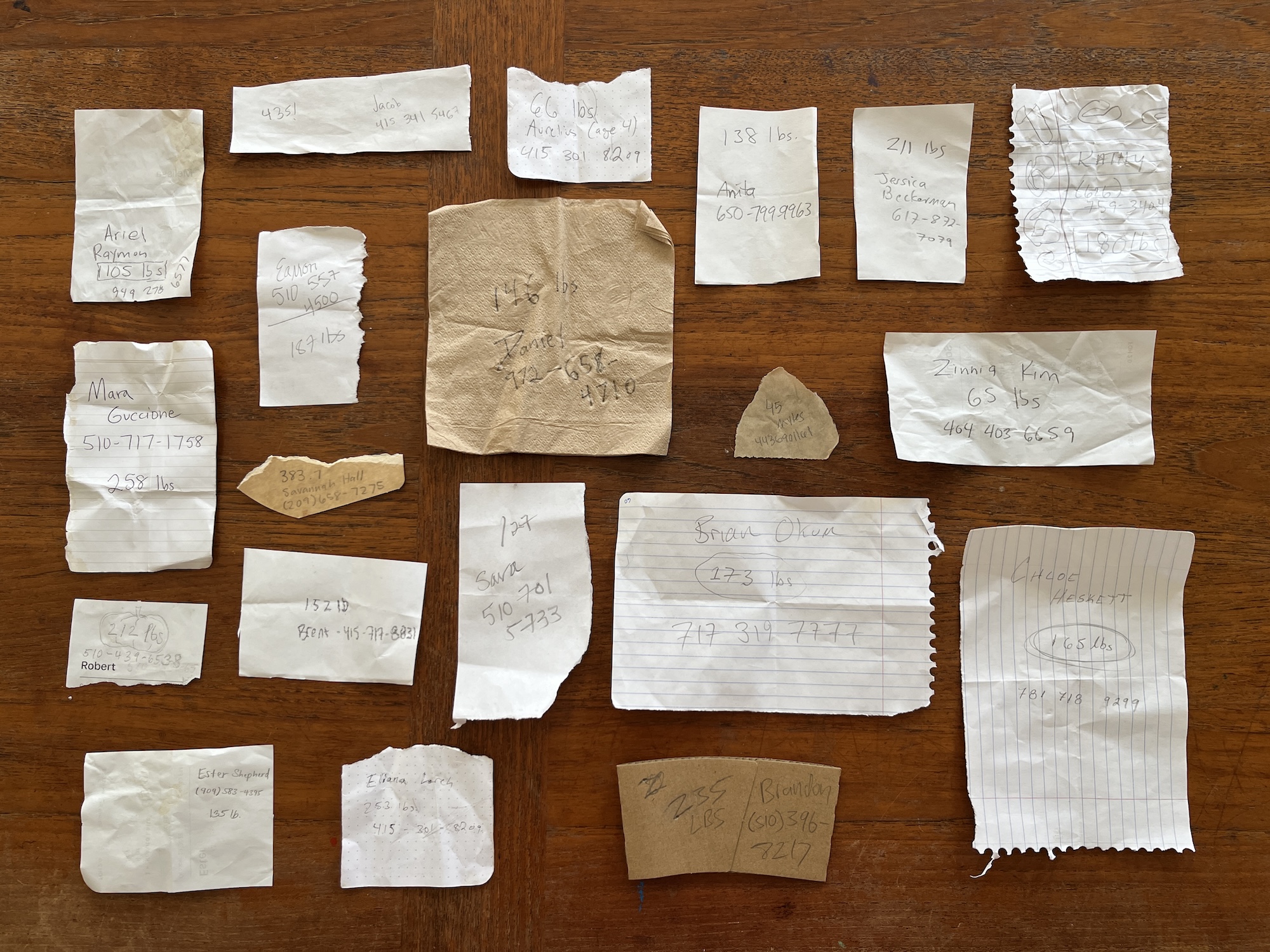
Every October, I run a pumpkin-weight-guessing contest in cahoots with my friends at the Hidden Cafe in Berkeley. We insist on using paper ballots instead of QR codes, because they're more fun, but it's a lot of work to tally up the results. In the past I've recruited my kids to type them all into a spreadsheet, but this year I was able to feed images of the handwritten ballots into Claude Code, and it was able to read people's handwriting and compile all the guesses in a spreadsheet for me!
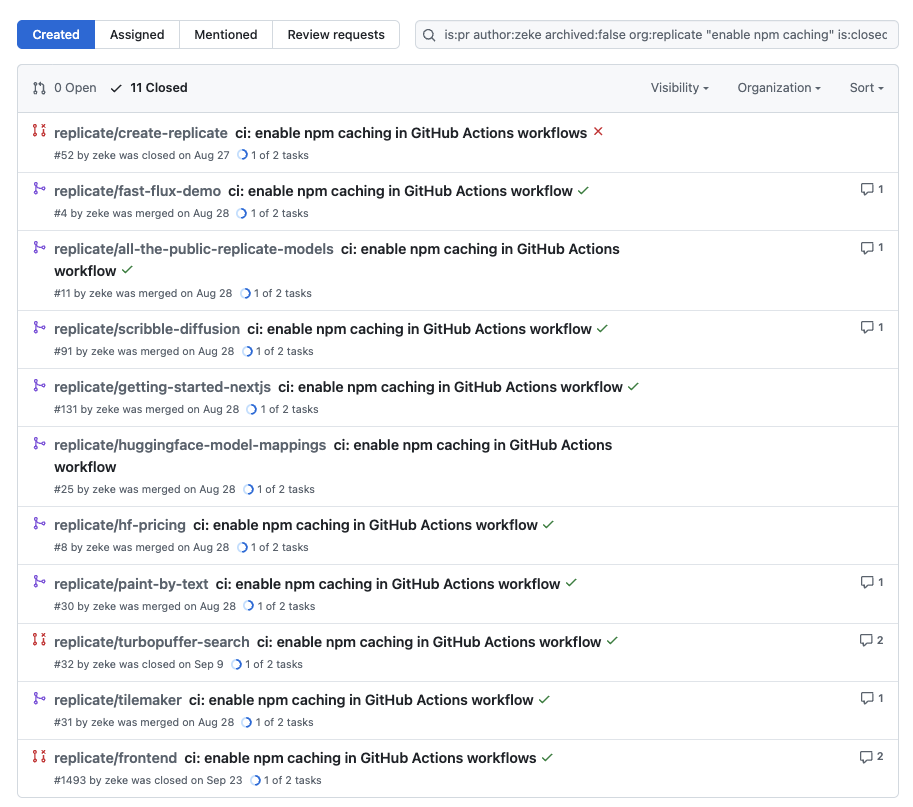
At some point it occurred to me that I don't have to run Claude in a single project with a single GitHub repository... Why not move up to a higher directory, and let Claude work on multiple related codebases all at once!? This stroke of insight has completely changed my workflow, and I'm now able to make changes across Replicate's stack, which is incredibly powerful when working on features that require changes to as many as five different GitHub repos.
I've been organizing and hosting free vibe-coding popup workshops in the East Bay, where we use AI tools like Claude Code to teach the basics of vibe coding to kids and people from all backgrounds.
I've been attending (and enjoying) the office hours sessions that Thariq has been hosting on X. It's been great to connect with other developers and learn from the Anthropic team about Claude's capabilities and best practices.
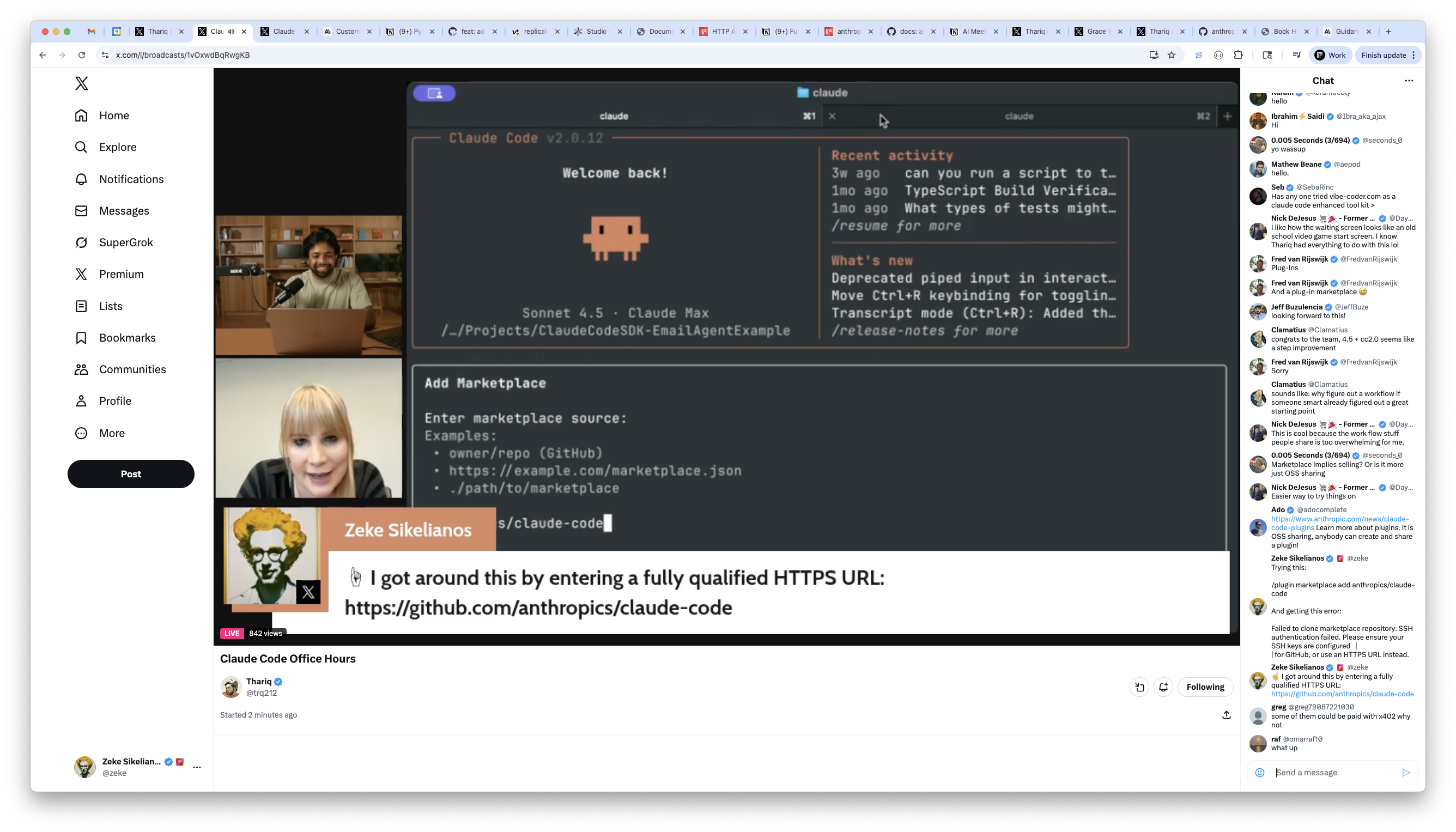
That's a taste of some of the Claude-related things I've been working on, but there are many more. I'm constantly refining the balance between safety and uninhibitedness with my Claude configuration, using a combination of `--dangerously-skip-permissions` and planning mode. I'm working on a Docker devcontainer setup for Replicate's stack that gives Claude just the right amount of permissions to safely do its thing without too much supervision. I'm also really excited about Claude's new plugins feature, which our team at Replicate can use to standardize and share our best practices for using Claude in our various codebases. And Skills™ looks awesome, too! So much to explore...
| First name | Ezekiel |
| Last name | Sikelianos |
| Name pronunciation | "zeek" |
| zeke@sikelianos.com | |
| Phone | 505.459.2942 |
| CV / resume | zeke.sikelianos.com/cv |
| Website | zeke.sikelianos.com |
| GitHub | github.com/zeke |
| X (Twitter) | x.com/zeke |
| linkedin.com/in/sikelianos | |
| Location | San Francisco, CA (Berkeley) |
| Open to working in office | Yes |
| Open to relocation | No |
| Require visa sponsorship | No |